Top Ethernet Cables for Gaming and Streaming: Ultimate Guide 2026
Top Ethernet Cables for Gaming and Streaming: Ultimate Guide 2026

Online gaming and high-resolution streaming have changed how home networks are built. Speed alone is no longer sufficient; factors such as stability, latency, and packet loss are becoming more important. Ethernet cables consistently outperform wireless connections in these critical areas. While WiFi continues to improve, serious gamers and streamers still rely on wired Ethernet cables for one reason: consistency.
In 2026, gaming traffic is heavier than ever. Game engines stream assets in real time. Streaming platforms push higher bitrates. Multiplayer games demand instant feedback. A weak or poorly chosen Ethernet cable can become the silent bottleneck. This guide explains which Ethernet cables perform best for gaming and streaming and why those differences matter in real-world use.
Why Ethernet Still Wins for Gaming
Wireless networks are convenient. They are also unpredictable. Signal interference, distance, and device congestion affect performance. Ethernet cables remove these variables. Data travels through copper conductors in a controlled path. Latency becomes stable. Packet delivery becomes reliable.
For competitive gaming, even minor delays can affect reaction time. For streaming, inconsistent throughput causes buffering and dropped frames. Ethernet cables provide a direct line between your device and the router or switch. That physical connection is the foundation of stable performance.
Key Performance Factors
Not all Ethernet cables behave the same. Many look similar from the outside. Inside, the design choices shape how data moves during gaming and streaming. These factors determine whether a connection feels stable or frustrating.
Bandwidth Capacity and Data Flow
Bandwidth defines how much data an Ethernet cable can carry at once. Modern games stream significant assets continuously. Streaming platforms push higher bitrates every year. Ethernet cables with higher bandwidth capacity manage these demands without congestion and prevent slowdowns when multiple devices share the network.
Latency and Response Time
Latency measures how quickly data travels from your device to the server and back. In gaming, lower latency means faster reactions. Even slight delays affect competitive play. High-quality Ethernet cables maintain consistent signal timing, which keeps latency stable during long sessions.
Shielding and Interference Control
Electrical interference disrupts data signals. Nearby power cables, electronics, and wireless devices can introduce noise. Ethernet cables with better internal construction resist this interference. Cleaner signals reduce packet loss and improve overall stability.
Conductor Material
The material inside the cable matters more than many realize. Pure copper conductors transmit signals more efficiently than mixed alternatives. Over longer runs, this difference becomes noticeable. Stronger signal integrity means fewer errors and smoother performance.
Together, these performance factors define how an Ethernet cable behaves under pressure. Understanding them helps users choose cables that deliver consistency rather than unpredictable results.
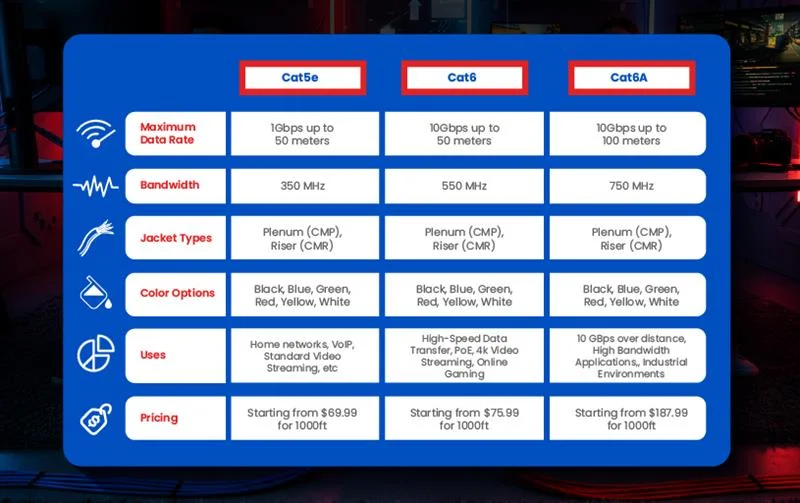
Cat5e Ethernet Cables
Cat5e Ethernet cables remain common in homes. They support speeds up to 1 Gigabit per second at distances up to 50 meters. For casual gaming and basic streaming, Cat5e still works.
However, modern gaming environments push Cat5e closer to its limits. When multiple devices share bandwidth, performance can degrade. Latency becomes less predictable. For players who game occasionally and stream at standard resolution, Cat5e may suffice. For anything more demanding, upgrading makes sense.
Cat6 Ethernet Cables
Cat6 Ethernet cables have become the practical baseline for gaming and streaming in 2026. They support higher bandwidth of 550 MHz and improved noise resistance compared to Cat5e. These technical advantages result in smoother gameplay and more stable streaming performance.
Cat6 cables handle up to 1 Gigabit speeds easily and can support higher speeds of 10 Gbps over shorter distances. Crosstalk reduction is better due to the inclusion of a plastic separator named spline. Signal loss is also lower. These improvements matter during peak usage hours when networks are under stress.
For gamers who play online shooters, strategy games, or fast-paced multiplayer titles, Cat6 delivers a noticeable improvement in consistency. Streamers benefit from steadier upload performance.
Cat6a Ethernet Cables
Cat6a Ethernet cables extend performance even further. They support higher bandwidth up to 750 MHz and are designed to support 10 Gigabit speeds over a complete distance of 100 meters. For gaming and streaming setups that run multiple displays, capture cards, and high-bitrate streams, Cat6a provides extra headroom.
Latency stability is one of the most substantial advantages. Even during long gaming sessions, performance remains steady. Heat buildup has less impact on signal quality. For users building future-ready networks, Cat6a is a long-term investment.
Cat6 Plenum Pure Copper cables stand out in performance-focused installations. Pure copper conductors maintain signal strength better than copper-clad alternatives. Plenum-rated jackets meet safety standards for airflow spaces. While the safety rating may not affect gaming directly, the build quality does. Better materials lead to better performance over time.
Shielded vs Unshielded Cables

Shielding helps protect Ethernet cables from external electrical interference. Interference becomes a concern in environments filled with electronic devices. Gaming setups often include consoles, PCs, monitors, power supplies, and audio equipment. Electrical noise from these devices can disrupt signal quality.
Shielded cables reduce this interference. However, they are thicker and less flexible. Unshielded cables are easier to install and work well in low-interference environments.
For most home gaming setups, high-quality unshielded Cat6 or Cat6a cables perform excellently. Shielded cables become useful in apartments, offices, or spaces with heavy electrical activity.
Cable Length and Signal Integrity
Ethernet cables are rated for maximum distances. Shorter runs always perform better. Excessively long cables introduce signal loss and increase latency risk. Many gamers overlook this detail.
Using a cable that matches your actual distance needs improves performance. Avoid coiling excess cable tightly. Sharp bends should be avoided. These small physical factors influence long-term reliability.
Connector Quality Matters
RJ45 connectors play a critical role in overall cable performance. Poorly terminated connectors lead to packet loss and intermittent disconnections. These issues are especially frustrating during gaming sessions or live streaming.
Factory-terminated cables with proper testing offer better reliability. Gold-plated contacts resist corrosion. Strain relief protects the internal wires from movement damage. These details separate high-quality Ethernet cables from generic ones.
When Upgrading Makes a Real Difference
Not every setup needs the highest category cable. The right choice depends on usage. Here is a simple breakdown to guide decisions.
- Casual gaming and basic streaming benefit from Cat6 over Cat5e
- Competitive gaming sees improved stability with Cat6a
- High bitrate streaming and multi-device setups gain long-term value from Cat6a pure copper cables
This single upgrade often improves network performance more than router changes alone.
Ethernet Cables and Future Proofing
Gaming and streaming technology evolves quickly. New codecs increase data demands. Cloud gaming services rely heavily on network quality. Choosing Ethernet cables with higher performance margins protects your setup against future requirements.
Ethernet cables last for years when properly installed. Investing in higher-quality materials today avoids replacement later. Pure copper conductors and well-designed jackets age better. Signal performance remains consistent.
Final Thoughts
Ethernet cables rarely get attention. They sit behind desks and walls. Yet they carry every packet that makes gaming responsive and streaming smooth. In 2026, choosing the right Ethernet cable is not about chasing specs. It is about understanding how real-world performance works.
For most gamers and streamers, Cat6 represents a strong foundation. For those who demand more stability, Cat6a delivers confidence. High-quality Ethernet cables built with pure copper conductors provide consistency that wireless networks cannot match.
Frequently Asked Questions
1. Which Ethernet cable is best for gaming in 2026?
Cat6 is ideal for most gamers, offering stable latency and better noise resistance, while Cat6a suits competitive gaming and high-traffic setups.
- Does an Ethernet cable reduce gaming lag?
Yes. Ethernet cables provide stable data delivery, reducing latency spikes, packet loss, and interference common with WiFi connections.
- Is Cat5e still good for gaming and streaming?
Cat5e works for casual gaming and standard streaming, but it struggles under heavy traffic and is less future-ready than Cat6 or Cat6a.
- Does cable length affect gaming performance?
Longer cables increase signal loss. Shorter, properly routed Ethernet cables deliver better latency stability and long-term reliability.
- Are shielded Ethernet cables necessary for gaming?
Not always. Shielded cables help in high-interference environments, but high-quality unshielded Cat6 or Cat6a cables work well in most homes.
- Why is pure copper Ethernet better than CCA?
Pure copper conductors transmit signals more efficiently, reduce data errors, and maintain stable performance over long gaming and streaming sessions.